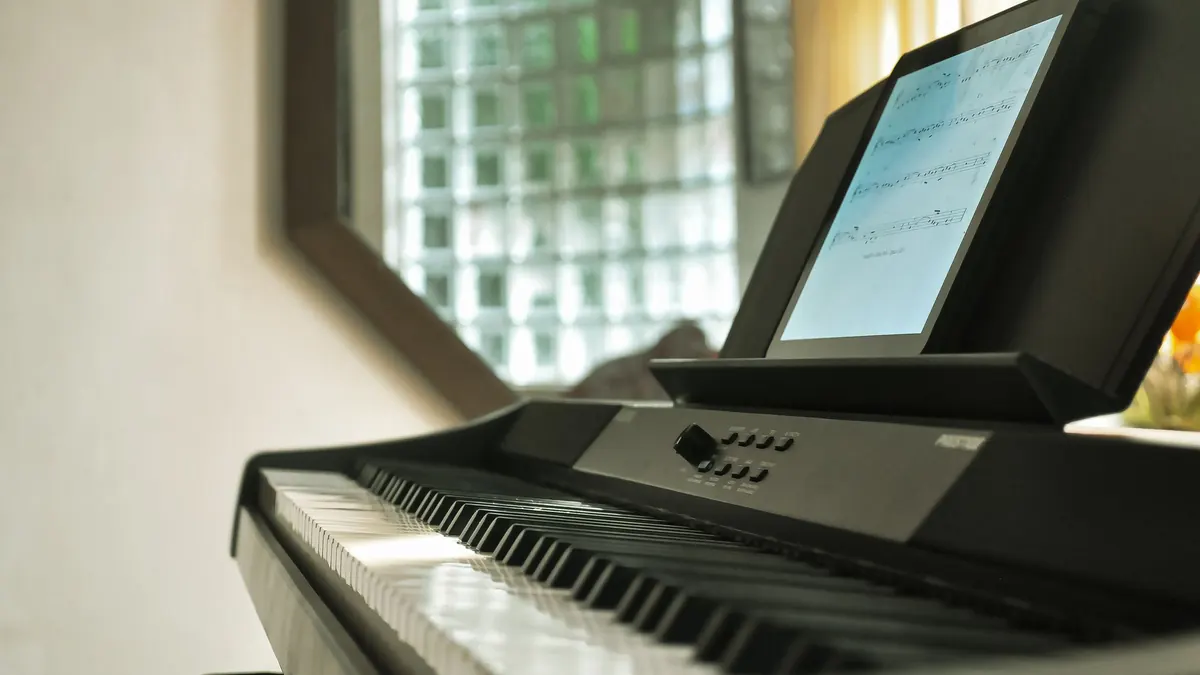
One of the first questions every beginner asks is whether to learn on a real piano or a keyboard. The honest answer: you can learn on either, but some features make a big difference to how quickly you progress and how well your skills transfer. This guide explains the three main types of instrument, the features that matter, and which to choose for your situation and budget.
The three main options
1. Acoustic piano
An acoustic piano makes sound with hammers striking strings. Uprights stand against a wall; grands are larger with a horizontal frame.
- Pros: the real touch and sound, a huge range of expression, and no electronics to become outdated. A good acoustic can last for decades.
- Cons: needs regular tuning (often once or twice a year), takes up space, is hard to move, and cannot be turned down. Playing at night in an apartment may not be possible. Cheap used pianos can hide expensive problems, so have a technician inspect one before buying.
2. Digital piano
A digital piano is designed to imitate an acoustic: usually 88 keys, weighted keys and sampled piano sound. Some are cabinet-style furniture; others are slim and portable.
- Pros: realistic feel at a much lower cost, no tuning, headphone jack for silent practice, often a built-in metronome and recording, and USB or MIDI for apps and computers.
- Cons: the feel and sound vary a lot by model, and even good ones do not fully match a fine acoustic.
3. Portable keyboard
A portable keyboard is light and inexpensive, usually with 61 or 76 unweighted keys and many built-in sounds and rhythms.
- Pros: affordable, lightweight, runs on batteries or a small adapter, fun built-in sounds and accompaniment.
- Cons: light, springy keys do not build finger strength or control the way weighted keys do, and fewer keys limit some pieces. Moving to a real piano later can feel heavy at first.
The features that matter most
Touch-sensitive keys (must have)
The harder you press, the louder the note. Without touch sensitivity (also called velocity sensitivity), every note has the same volume and you cannot learn dynamics. Avoid any keyboard without it.
Full-size keys (must have)
Mini keys are fine for toys and music production, but not for learning piano. Your fingers need standard key widths.
Number of keys
A full piano has 88 keys. For beginner music, 61 keys is enough for the first year or more; 76 gives you more room; 88 means you will never outgrow the range. If budget allows, choose 88.
Weighted or hammer-action keys (strongly recommended)
Weighted keys have resistance like an acoustic piano, and "graded hammer action" is heavier in the bass and lighter in the treble, like a real piano. Semi-weighted keys are in between. If you plan to play acoustic pianos or classical music, weighted keys are worth it.
A sustain pedal
The sustain pedal lets notes ring after you lift your fingers. It is essential for ballads and connected chords. Digital pianos usually include one; with keyboards it is often an extra. A pedal shaped like a real piano pedal is easier to use than a small square switch.
Polyphony
Polyphony is how many notes the instrument can sound at once. With the sustain pedal down, notes add up fast. Low polyphony can cut notes off. Many digital pianos offer 64, 128 or more, which is plenty for a beginner.
Sound quality and speakers
Play a few chords and a slow melody with the pedal down. Does it sound like a piano or like a toy? Try it through headphones too, since you may practice that way most of the time.
Connectivity
A USB or MIDI output lets you connect to learning apps, recording software and notation programs. A headphone jack is essential for apartment living.
Features you can ignore at first
- Hundreds of built-in sounds and rhythms (fun, but not important for learning piano).
- Light-up keys (can help some learners, but can also stop you from learning the keyboard yourself).
- Advanced recording and effects.
Which should you choose?
- Tight budget, not sure you will stick with it: a 61-key touch-sensitive keyboard with full-size keys and a sustain pedal. Plan to upgrade if you keep going.
- Serious about learning, apartment or shared space: an 88-key digital piano with weighted (ideally graded hammer) action. This is the best all-round choice for most adult beginners.
- Have the space, want the real thing, can play at any hour: a well-maintained acoustic upright, inspected by a technician.
- Want to play in a band or travel: a portable digital piano or a stage piano with weighted keys.
Setting up your instrument
- Height: your forearms should be about level with the keys when seated. Keyboard stands are adjustable; set it before you start.
- Seat: an adjustable bench helps. Avoid soft sofas or low chairs.
- Location: somewhere you walk past every day, with good light. If it is easy to sit down and play, you will practice more.
- Music stand: for sheet music or a tablet with lessons.
Once you are set up, start with our first piano lessons or the beginner roadmap.
Common questions
Can I learn real piano on a keyboard?
Yes. Chords, reading, theory and coordination all transfer. The main difference is touch: if you later play an acoustic piano, expect a short adjustment period, especially from unweighted keys.
Is a used instrument a good idea?
Often, yes. Digital pianos can be good used buys if all keys and the pedal work. For used acoustic pianos, always get a technician's opinion first.
Do I need lessons in person if I have a keyboard?
No. Many adults learn at home with a course, book or app. See how to teach yourself piano at home.
Summary
For beginners, the instrument matters less than practicing regularly, but a few features really help: full-size, touch-sensitive keys, a sustain pedal, and ideally 88 weighted keys. A digital piano is the best choice for most adults; a 61-key keyboard is a fine budget start; an acoustic piano is wonderful if you have the space and can maintain it. Once you have your instrument, start with our free 7-day beginner piano plan.
More beginner piano guides
Easy Piano Songs for Beginners: 20 Songs Grouped by the Chords You Need
Simple melodies, four-chord pop songs and easy classics, with the chords for each.
Read the guide
How to Read Piano Sheet Music: A Beginner's Step-by-Step Guide
The grand staff, clefs, landmark notes, rhythm and key signatures, explained simply.
Read the guide
A Beginner Piano Practice Routine That Actually Works (15, 30 or 45 Minutes)
Ready-made 15, 30 and 45 minute practice plans, plus techniques that make practice count.
Read the guide
How to Teach Yourself Piano at Home: A Complete Self-Study Plan
Set goals, choose your materials, plan your weeks and check your own technique.
Read the guide