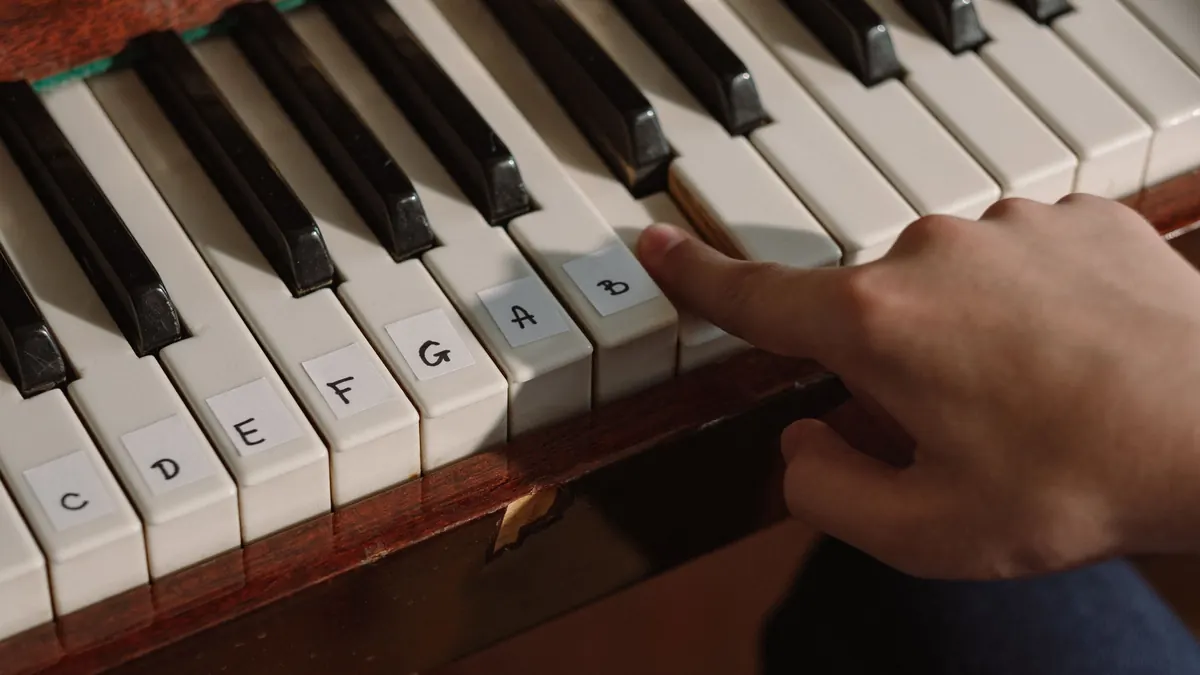
If you have never played piano before, the first few sessions decide whether you keep going. The goal is to make music quickly while building good habits from day one. These eight short lessons take you from sitting down for the first time to playing a simple piece with both hands. Do one or two lessons per practice session, and repeat any lesson that does not feel comfortable yet.
You need a piano or a keyboard with full-size keys, a bench or chair, and about 15 to 20 minutes per session.
Lesson 1: Sit and set up correctly
Good posture prevents tension and makes everything else easier.
- Sit facing the middle of the keyboard, roughly in front of middle C.
- Sit on the front half of the bench, with your feet flat on the floor.
- Sit far enough back that your elbows are slightly in front of your body when your hands are on the keys.
- Adjust the height so your forearms are about level with the keys.
- Let your shoulders drop and your back stay tall but relaxed.
Put your hands on your knees and notice their natural curved shape. Keep that shape when you place them on the keys.
Lesson 2: Find your way around
Look for the black keys grouped in twos and threes. The white key immediately left of a group of two black keys is C. Find every C on your keyboard and play each one from lowest to highest. Then find the C nearest the middle: that is middle C.
Next, name the white keys starting from C: C, D, E, F, G, A, B, C. Play them up and down while saying the names out loud. Then try a quiz: close your eyes, open them, and find a random note, such as "G" or "E," as fast as you can. Two minutes of this every day builds your mental map of the keyboard.
Lesson 3: Learn finger numbers
In both hands, thumb is 1, index 2, middle 3, ring 4 and pinky 5. Beginner music often prints these numbers over the notes. Tap each finger on your leg while saying its number, then do it on the keys. It feels silly for one minute, and then you never have to think about it again.
Lesson 4: Play your first melody
Place your right thumb on middle C, with fingers 2 to 5 on D, E, F and G. Now play the opening of "Ode to Joy" by Beethoven (a public domain melody) using these finger numbers:
3 3 4 5 | 5 4 3 2 | 1 1 2 3 | 3 2 2
Those are the notes E E F G | G F E D | C C D E | E D D. Play slowly, one note per beat, and hold the last note longer. Then play the answering phrase:
3 3 4 5 | 5 4 3 2 | 1 1 2 3 | 2 1 1
Congratulations, that is a real melody. Notice that your hand never moved: all five fingers stayed on their keys. This "five-finger position" is the basis of most beginner pieces.
Lesson 5: Your first chords
A chord is several notes played together. Keep your right hand in C position and play C, E and G together with fingers 1, 3 and 5. That is C major. Now move the same shape so your thumb is on G: play G, B and D with fingers 1, 3 and 5. That is G major. Finally, move your thumb to F and play F, A and C. That is F major.
Play each chord four times, counting "1, 2, 3, 4" steadily, then move to the next: C, F, G, C. At first you will pause between chords. Keep practicing until the change happens on the beat. For smoother changes with less hand movement, see our easy piano chords guide, which covers inversions.
Lesson 6: Wake up the left hand
Place your left pinky (finger 5) on the C one octave below middle C, with fingers 4, 3, 2 and 1 on D, E, F and G. Play C-D-E-F-G and back down, slowly. The left hand is usually weaker and less coordinated at first, so give it its own practice time.
Now play single bass notes: hold a low C for four beats, then a low F, then a low G, then back to C. These are the "roots" of the chords you just learned.
Lesson 7: Put both hands together
This is the step most beginners find hardest, so go slowly. Play the left-hand low C and the right-hand C chord at exactly the same moment, and hold for four beats. Then move both hands to F (left: low F, right: F-A-C), then G, then C.
Tips for hands together:
- Practice each hand alone until it feels automatic, then combine.
- Start much slower than you think you need to.
- Look ahead: before the change, glance at where both hands are going next.
- If you get lost, stop, reset both hands and start from the last chord, not from the very beginning.
Lesson 8: Add rhythm to sound like a real pianist
Instead of holding the chord for four beats, play it on every beat: "1, 2, 3, 4," while your left hand plays the root note only on beat 1. Then try a slightly more interesting pattern: left hand on beat 1 and beat 3, right hand chord on beats 2 and 4. This simple "oom-pah" pattern is the basis of countless songs.
Once that is comfortable, try the chord sequence C, G, A minor, F. That sequence (sometimes called the "four-chord progression") sits underneath a huge number of pop songs. Our list of easy piano songs for beginners shows which songs use which chords.
How long should each lesson take?
There is no deadline. Some people do lessons 1 to 4 in a single evening; others spend a week on lesson 7. A good rule: move on when you can play the current lesson correctly three times in a row without stopping, at a slow but steady tempo. If you are moving on but still stumbling, you will run into the same problem again later.
Common questions
Do I need to learn to read music first?
No. Plenty of people start with chords and patterns and learn to read music alongside, which many find more motivating. Reading is valuable, though, so add it gradually. See how to read piano sheet music.
My fingers feel weak and clumsy. Is that normal?
Completely. Fingers 4 and 5 in particular take time. Slow, relaxed practice builds control; pressing harder does not.
How often should I practice?
Daily, if possible, even for 10 minutes. Frequency matters more than length when you are building coordination.
Summary
To start playing piano as a beginner, set up your posture, learn to find C using the groups of black keys, memorize finger numbers, and play a simple five-finger melody. Then learn C, F and G major, wake up your left hand with root notes, combine both hands slowly, and add a simple rhythm. Move on only when the current lesson feels steady. For a day-by-day version of your first week, download our free 7-day beginner piano plan.
More beginner piano guides
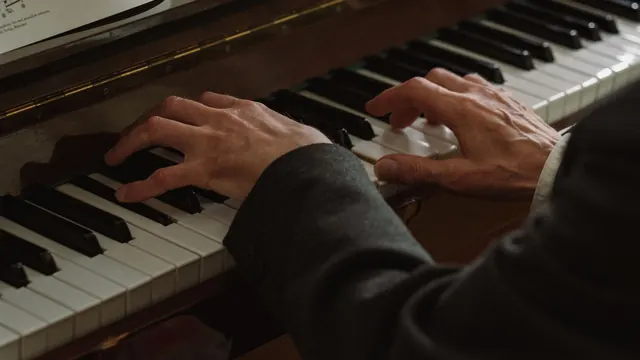
Easy Piano Chords for Beginners: The 8 Chords to Learn First
How chords are built, the 8 chords to learn first, and inversions for smooth changes.
Read the guide
How to Play Piano by Ear: A Step-by-Step Method for Beginners
Find the first note, work out the melody, then find the chords that fit underneath.
Read the guide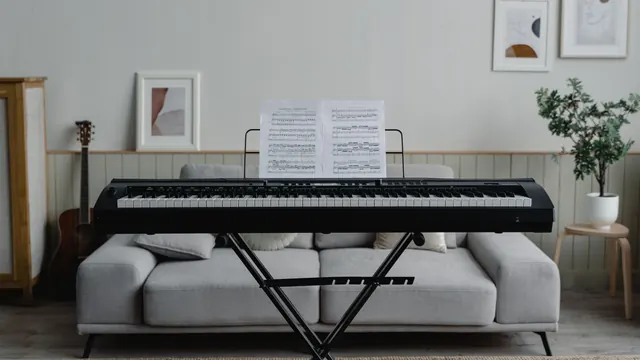
The Best Way to Learn Piano as an Adult: Teachers, Apps, Courses and Books Compared
Teachers, apps, online courses, YouTube and books compared, plus how adults learn best.
Read the guide
Piano vs Keyboard for Beginners: How to Choose Your First Instrument
Acoustic, digital piano or keyboard: the features that matter and what to skip.
Read the guide