
Chords are the fastest route from "I can't play anything" to "I can play songs." With a handful of easy piano chords and a simple left hand, you can accompany yourself or others on hundreds of popular songs. This guide explains how chords are built, gives you the eight chords to learn first, and shows you how to change between them smoothly using inversions.
What is a chord?
A chord is three or more notes played at the same time. The most common chords in popular music are triads: three notes stacked in a "skip-one" pattern. On the white keys, that means play a key, skip a key, play a key, skip a key, play a key. Starting on C gives you C-E-G, the C major chord.
The lowest note of the basic chord is the root, and it gives the chord its name. The middle note is the third, and the top note is the fifth.
Major vs minor: the half-step trick
A half step is the distance from one key to the very next key, black or white. Chords are defined by how many half steps lie between their notes:
- Major chord: root, then up 4 half steps, then up 3 more. It sounds bright and stable. Example: C-E-G.
- Minor chord: root, then up 3 half steps, then up 4 more. It sounds darker or more emotional. Example: A-C-E.
To turn any major chord into a minor chord, lower the middle note by one half step. C major (C-E-G) becomes C minor (C-E flat-G). That one rule lets you build any major or minor chord on any key.
The 8 easy chords to learn first
These chords all live in the key of C, use mostly white keys, and cover a large share of beginner songs.
| Chord | Notes | Right-hand fingers |
|---|---|---|
| C major | C, E, G | 1, 3, 5 |
| F major | F, A, C | 1, 3, 5 |
| G major | G, B, D | 1, 3, 5 |
| A minor | A, C, E | 1, 3, 5 |
| D minor | D, F, A | 1, 3, 5 |
| E minor | E, G, B | 1, 3, 5 |
| G7 (G dominant seventh) | G, B, D, F | 1, 2, 3, 5 |
| D major | D, F sharp, A | 1, 3, 5 |
Start with the first four: C, F, G and A minor. They are enough for many songs on their own. Add D minor and E minor next, then G7 (which pulls strongly back to C), then D major, your first chord with a black key.
How to practice a new chord
- Find the root and place your thumb on it.
- Place fingers 3 and 5 on the third and fifth, keeping your fingers curved.
- Lift your hand off the keyboard, then put it back and play the chord without looking for a moment. Repeat ten times.
- Play the notes one at a time, low to high and back (an "arpeggio"), to hear each note clearly.
- Play the chord with your left hand too, using fingers 5, 3 and 1.
Inversions: the secret to smooth chord changes
If you play every chord in its basic "root position," your hand jumps all over the keyboard: C to F to G is a big leap each time. Pianists avoid this with inversions: the same notes, rearranged so a different note is at the bottom.
C major has three positions:
- Root position: C-E-G
- First inversion: E-G-C (move the C to the top)
- Second inversion: G-C-E (move the E to the top too)
Now try this smooth progression with your right hand, starting with C in root position:
- C: C-E-G (fingers 1-3-5)
- F: C-F-A (fingers 1-4-5). Your thumb stays on C; two fingers move up a little.
- G: B-D-G (fingers 1-2-5). Your hand moves down just one key at the bottom.
- C: C-E-G again.
Your hand barely moves, the changes are faster, and the chords sound more connected. Keep the left hand on the root notes (C, F, G, C) so the harmony stays clear.
The same idea works for the four-chord progression C, G, A minor, F: try C-E-G, then B-D-G, then A-C-E, then A-C-F. Each change moves only one or two fingers.
Simple left-hand patterns
- Root only: play the chord's name note low in the left hand, once per bar.
- Root and fifth: play the root and the fifth together (C and G for a C chord). Strong and full.
- Octave: root with finger 5 and the same note an octave higher with finger 1.
- Broken pattern: root, fifth, octave, fifth (C-G-C-G), one note per beat. Great for ballads.
Practice progressions
Play each chord for four beats with a steady count. When that is easy, play two beats per chord.
- C, F, C, G (a basic folk and country sound)
- C, G, A minor, F (the four-chord pop progression)
- C, A minor, F, G (the classic 1950s "doo-wop" sound)
- A minor, F, C, G (the same chords, starting on the minor, for a moodier feel)
- D minor, G7, C (a short jazz-flavored ending called a "two-five-one")
Once these feel easy, look at our easy piano songs for beginners to put them to use.
Common chord problems and fixes
- One note is quieter than the others. Usually finger 5 or the thumb. Practice the chord as a slow arpeggio, then press all three with equal weight.
- Your hand tenses up. Play, then let your wrist go soft while the keys stay down. Pressing harder does not make a chord sound better.
- Changes are slow. Use inversions, and practice just the change itself: chord A, chord B, back and forth ten times.
- You forget which notes go in a chord. Say the notes out loud as you play. Within a week the shapes become automatic.
Where to go next
Once these eight chords feel comfortable, learn the same shapes in other keys: G major (G, C, D, E minor) and F major (F, B flat, C, D minor) are the next most common. Then add seventh chords, which add a fourth note and give a richer, jazzier sound. Most importantly, use your chords in real songs as soon as possible, because that is where they stick.
Summary
Easy piano chords are built by stacking every other key: root, third and fifth. Major chords use 4 then 3 half steps, minor chords use 3 then 4. Learn C, F, G and A minor first, then D minor, E minor, G7 and D major. Use inversions so your hand barely moves between chords, keep the left hand on roots, and practice common progressions at a steady beat. Our free 7-day plan includes a printable chord chart for the first four chords.
More beginner piano guides

How to Play Piano by Ear: A Step-by-Step Method for Beginners
Find the first note, work out the melody, then find the chords that fit underneath.
Read the guide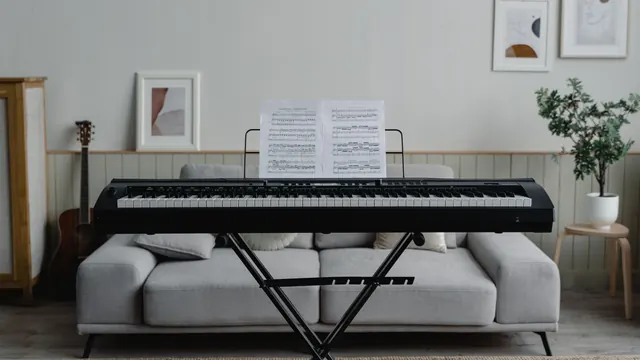
The Best Way to Learn Piano as an Adult: Teachers, Apps, Courses and Books Compared
Teachers, apps, online courses, YouTube and books compared, plus how adults learn best.
Read the guide
Piano vs Keyboard for Beginners: How to Choose Your First Instrument
Acoustic, digital piano or keyboard: the features that matter and what to skip.
Read the guide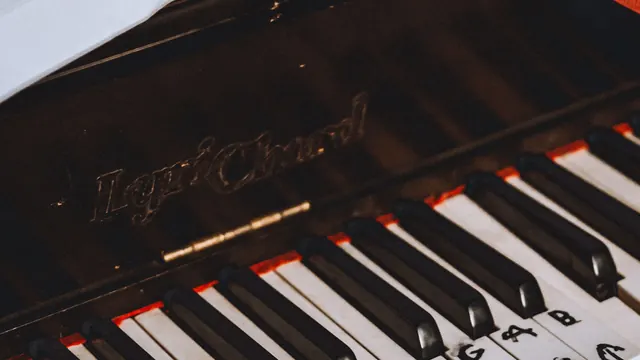
Easy Piano Songs for Beginners: 20 Songs Grouped by the Chords You Need
Simple melodies, four-chord pop songs and easy classics, with the chords for each.
Read the guide