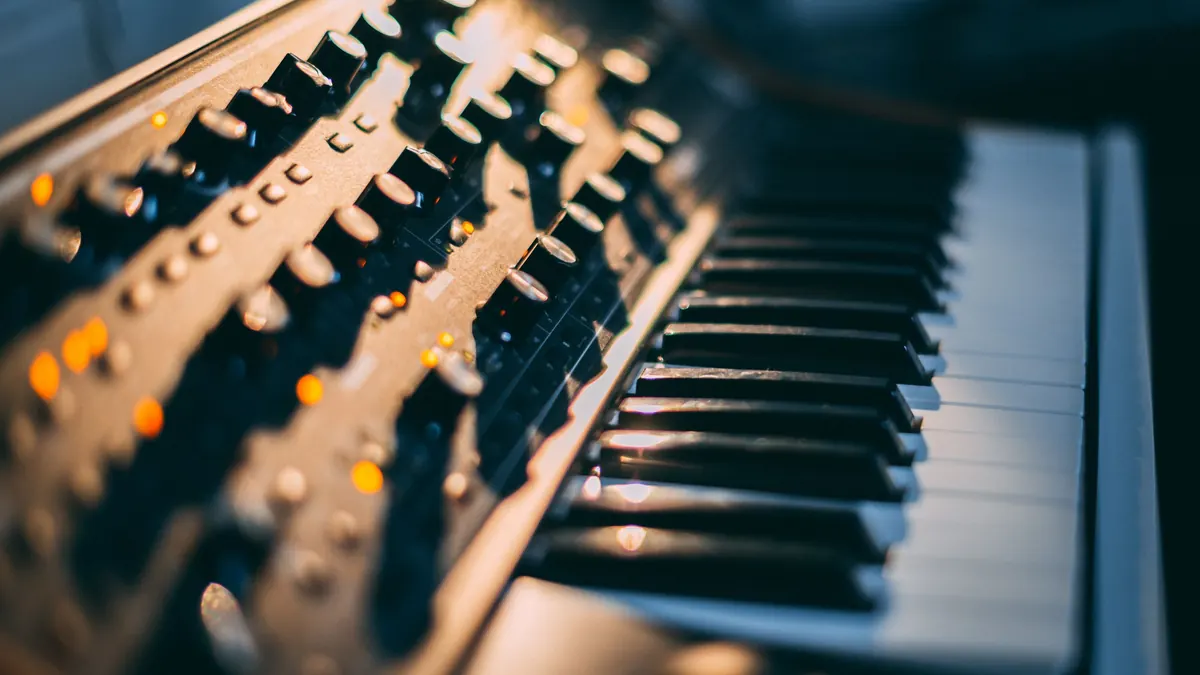
Many people teach themselves piano at home, and with today's resources it is more realistic than ever. Self-teaching gives you freedom: you choose the music, the schedule and the pace. The challenge is that nobody gives you a plan, corrects your hand position or tells you what to practice next. This guide fills those gaps with a complete self-study plan.
Step 1: Decide what you want to play
Your goal shapes everything else. Write one sentence describing what you want to be able to do in a year. For example:
- "Play and sing along to pop songs for my family."
- "Play simple classical pieces like the 'Minuet in G' and the opening of 'Für Elise.'"
- "Improvise relaxing music and play some blues."
- "Accompany worship music using chords."
Chord-based goals (pop, worship, accompanying, blues) suit a chords-first approach. Classical goals require more focus on reading music. Most self-learners benefit from some of both. Our comparison of the best ways to learn piano as an adult explains the options.
Step 2: Set up a practice space
- A piano or keyboard with full-size, touch-sensitive keys and a sustain pedal. See piano vs keyboard for beginners.
- An adjustable bench or chair at the correct height.
- A metronome app, a notebook for your practice log, and your phone to record yourself.
- Headphones, if you share your home.
Put the instrument somewhere you pass every day. If practicing requires unpacking, you will practice less.
Step 3: Choose one main learning resource
The most common self-teaching mistake is jumping between resources: a video here, an app there, a random song tutorial. You learn fragments without foundations. Instead, choose one main structured resource (a method book, an online course or an app) and follow it in order. Use other resources only as supplements.
A good main resource should:
- Follow a clear sequence, where each lesson builds on the last.
- Let you see and hear examples (video and audio), not only read about them.
- Match your goal: chords and songs, or reading and classical pieces.
- Get you playing real music early, to keep you motivated.
Step 4: Learn the core skills in the right order
- Keyboard geography: finding every note quickly using the black-key groups.
- Posture and hand shape: relaxed, curved fingers and level wrists.
- Five-finger melodies in each hand.
- Basic chords: C, F, G and A minor, then D minor, E minor and G7. See easy piano chords.
- Steady rhythm: counting, the metronome and simple left-hand patterns.
- Hands together: melody over root notes, then over chords.
- Reading: notes around middle C, note values, time signatures.
- Inversions and smooth changes.
- Ear skills: picking out melodies and chords.
- Scales and new keys: G, F and D major.
Step 5: Plan your weeks
Self-learners need a schedule, because nobody else will set one. A simple approach:
- Each week: one new skill, one new song (or section), and one review song.
- Each day: 15 to 30 minutes using a fixed routine. Our beginner practice routine has ready-made plans.
- Each month: record yourself and compare with last month.
Step 6: Be your own teacher
Without a teacher, you need to check your own technique. Use this self-check list once a week, ideally while watching a video of yourself:
- Are my shoulders relaxed, or creeping up toward my ears?
- Are my wrists level, or collapsing below the keys?
- Are my fingers curved, playing with the pads rather than flat?
- Is my thumb resting on the key, or sticking out stiffly?
- Is my rhythm steady, or do I slow down at hard spots?
- Do I stop and restart after mistakes, or keep going?
Compare your playing with demonstrations from your course or book. If something looks very different, slow down and correct it before it becomes a habit.
Step 7: Stay motivated
- Play music you love, even simplified versions, from early on. See our easy piano songs.
- Celebrate small wins: your first clean chord change, your first song hands together.
- Join a community: online forums and student groups help you share progress and get answers.
- Play for someone once a month, even just a friend on a video call.
- Expect plateaus. Everyone has weeks where nothing seems to improve. Keep practicing; breakthroughs often follow.
When to consider a teacher
Self-teaching works for many people, but a few lessons can help when:
- You feel pain or persistent tension while playing.
- You have been stuck on the same problem for weeks.
- You want to play advanced classical repertoire or take exams.
- You want feedback on technique you cannot see yourself.
Even an occasional lesson every month or two can be enough to check your technique and keep self-study on track.
Common self-teaching pitfalls
- Skipping the basics. It is tempting to jump straight to a favorite song that is far too hard. Learn simplified versions first and build up.
- Never playing hands together. Many self-learners stay with the right hand alone for months. Combine hands early, slowly, with simple left-hand parts.
- Ignoring rhythm. Correct notes in uneven time do not sound like music. Use a metronome regularly.
- Learning only by watching. Videos and falling-note tutorials are helpful, but if you only copy, you never learn why the music works. Learn the chords and patterns underneath.
- Practicing in bursts. A whole weekend of practice followed by two weeks off undoes most of the progress. Short and daily wins.
A sample first month of self-study
- Week 1: keyboard geography, posture, finger numbers, five-finger melodies in C position.
- Week 2: C, F and G chords in the right hand, root notes in the left, simple counting.
- Week 3: A minor, the C-G-Am-F progression, and your first song with hands together.
- Week 4: inversions for smoother changes, reading notes around middle C, and picking out a simple melody by ear.
Summary
To teach yourself piano at home, set a clear goal, set up a practice space you will actually use, and follow one structured main resource in order. Learn core skills step by step, plan your weeks, check your own technique with video, and play music you love to stay motivated. Get a teacher's help for pain, long plateaus or advanced goals. Start today with our free 7-day beginner piano plan.
More beginner piano guides

Learn Piano for Beginners: A Realistic Roadmap for Your First 3 Months
What you need, how the keyboard is laid out, your first chords and a month-by-month plan.
Read the guide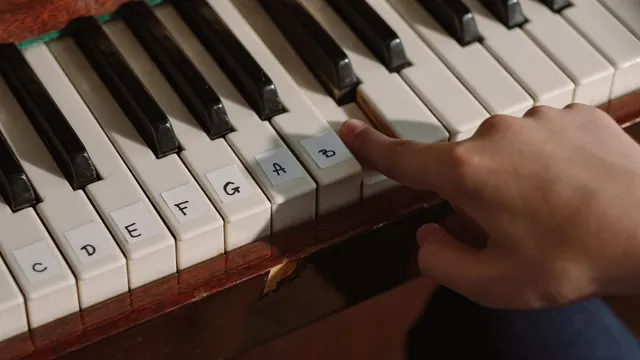
How to Play Piano for Beginners: 8 First Lessons You Can Do at Home
Eight first lessons, from posture and finding C to playing both hands together.
Read the guide
Easy Piano Chords for Beginners: The 8 Chords to Learn First
How chords are built, the 8 chords to learn first, and inversions for smooth changes.
Read the guide
How to Play Piano by Ear: A Step-by-Step Method for Beginners
Find the first note, work out the melody, then find the chords that fit underneath.
Read the guide